


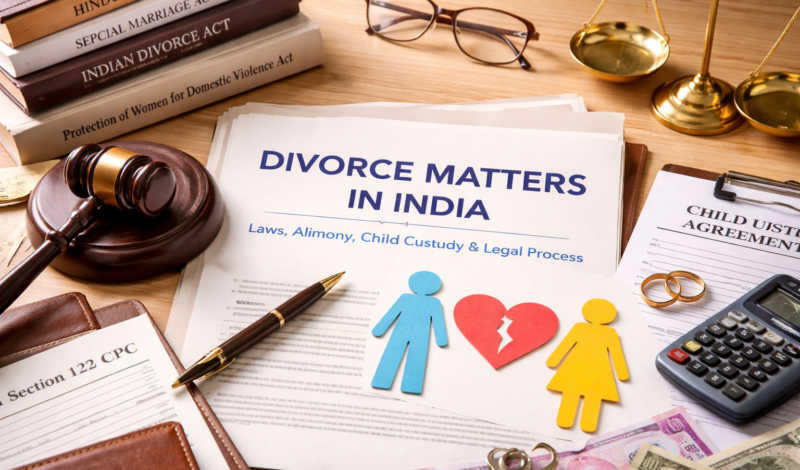

Divorce matters in India are governed by a combination of personal laws and statutory provisions, depending on the religion of the parties involved. Key legislations such as the Hindu Marriage Act, 1955, Special Marriage Act, 1954, Indian Divorce Act, 1869, and Muslim Personal Law regulate the process, rights, and remedies available to spouses. Understanding these legal frameworks is essential for individuals seeking separation or dissolution of marriage.
The legal process of divorce in India broadly falls into two categories—mutual consent divorce and contested divorce. In a mutual divorce, both parties agree to end the marriage amicably, making the process faster and less complex. However, in contested divorce cases, one party files a petition on grounds such as cruelty, desertion, adultery, or mental disorder, which may require detailed evidence and prolonged court proceedings.
Alimony and maintenance are critical aspects of divorce matters. Courts ensure that the financially weaker spouse receives fair support either as interim maintenance during the case or as permanent alimony after the divorce. The amount depends on factors such as income, lifestyle, financial needs, and responsibilities of both parties. Provisions under Section 125 of CrPC and relevant personal laws provide legal backing for maintenance claims.
Child custody is another sensitive and significant issue in divorce cases. Indian courts prioritize the welfare and best interests of the child above all else. Custody may be granted as physical custody, joint custody, or visitation rights, depending on the circumstances. The court carefully evaluates factors such as the child’s age, emotional needs, and the ability of each parent to provide a stable environment.
In addition to these aspects, divorce proceedings may also involve division of assets, settlement agreements, and protection against domestic violence under laws like the Protection of Women from Domestic Violence Act, 2005. Legal representation plays a crucial role in ensuring that rights are protected and the process is handled efficiently.
Divorce matters can be emotionally and legally challenging, but with proper legal guidance and awareness, individuals can navigate the process more confidently. Consulting an experienced lawyer helps in making informed decisions, reducing conflicts, and achieving a fair and just resolution.